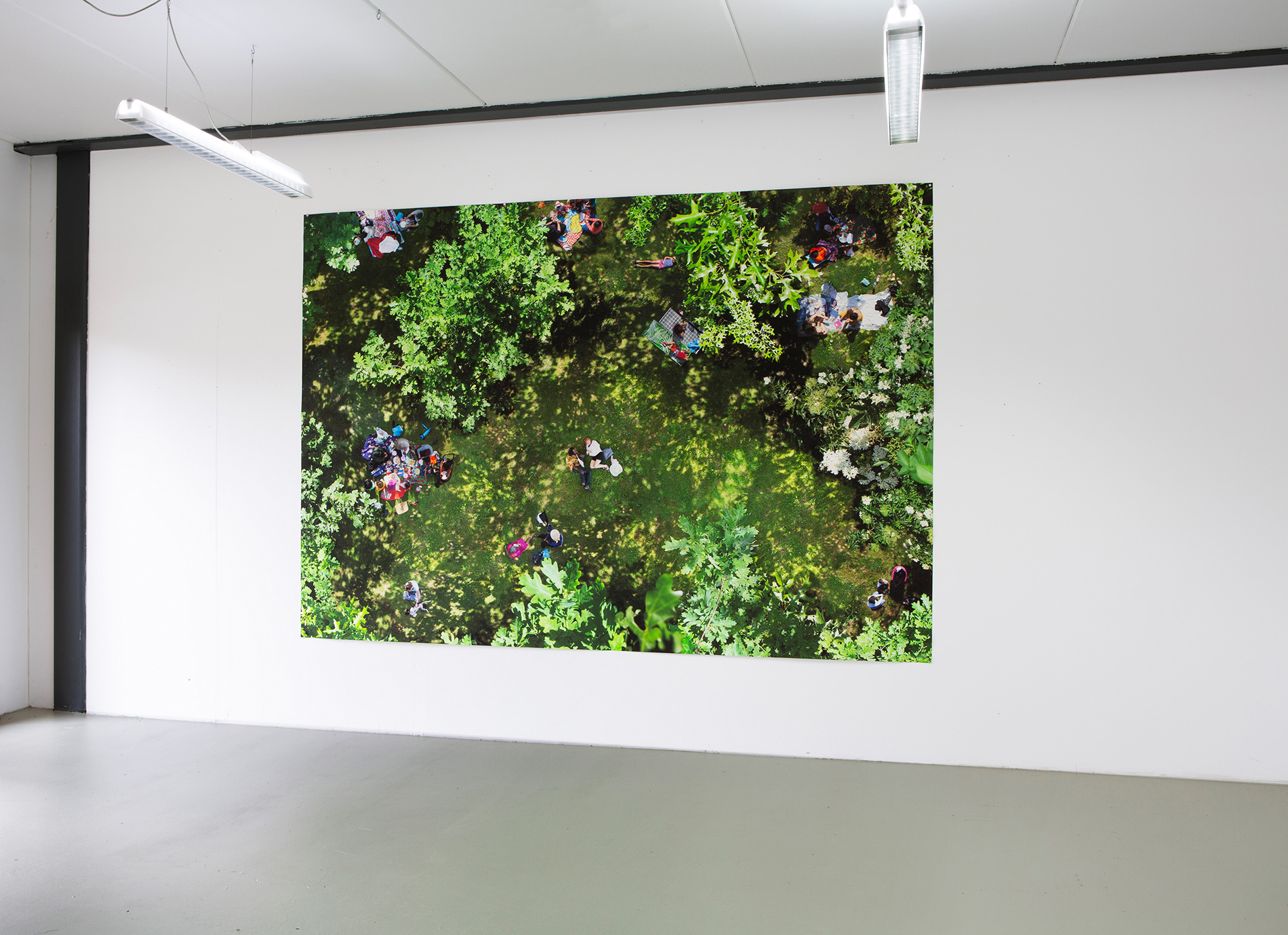
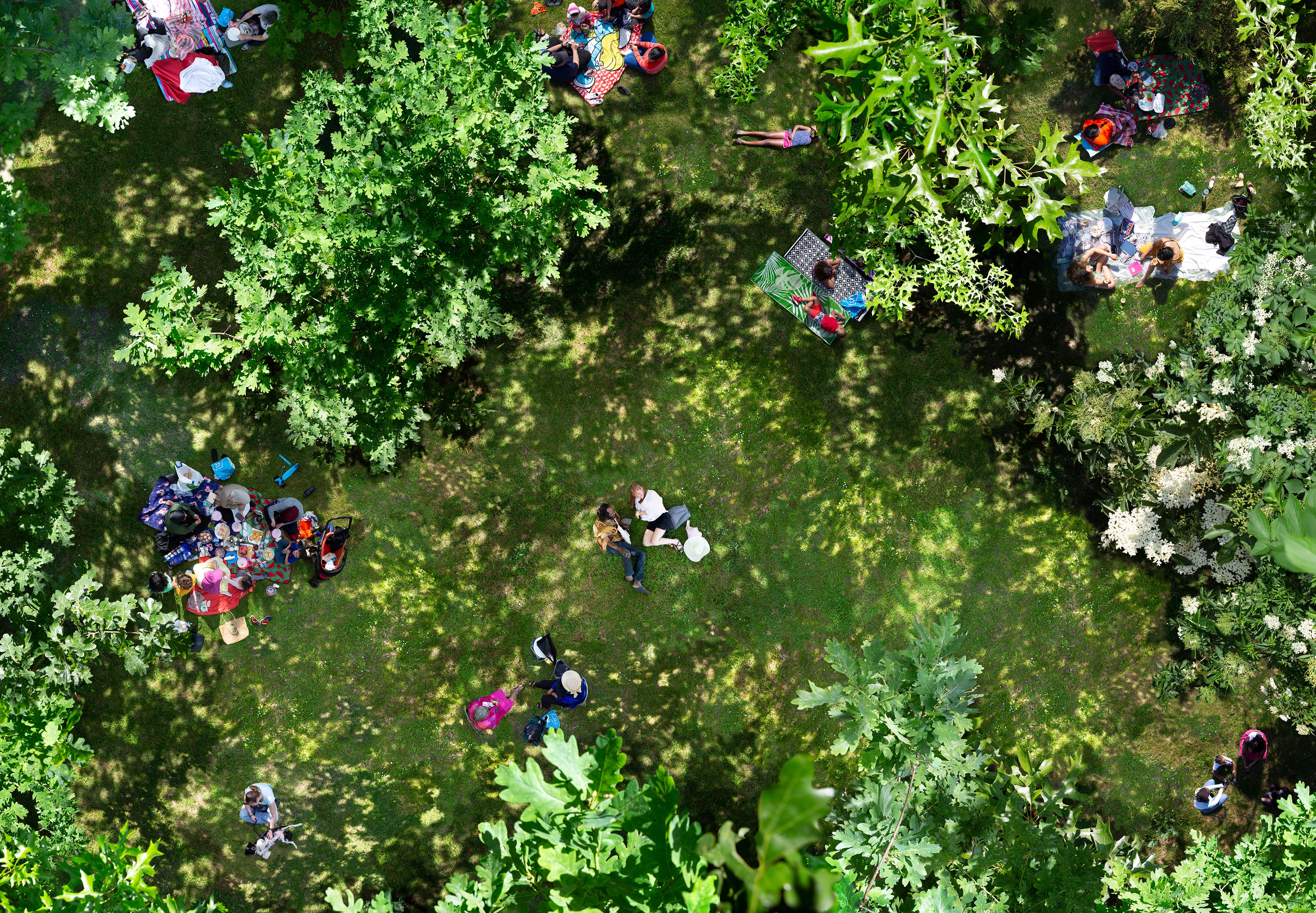
Nelson Mandela Park Paradise, Amsterdam Bijlmer
Piezography
size: 200 x 288 cm / 79” x 113”
year: 2022
Korfmann's series Symbiocene was inspired by Glenn Albrecht, an environmental philosopher and writer. He coined the term Symbioceen to describe a new era in which humans, nature, and technology coexist in harmony and support one another. His theory presents a hopeful outlook for what lies ahead. For this series, Korfmann photographed various parks in Amsterdam.
The photo Nelson Mandela Park Paradise was taken during the coronavirus pandemic in the park of the same name in Amsterdam-Zuidoost. Reflecting on Albrecht's theory, the photo dissolves the distinction between nature and culture, showing people as part of the park.
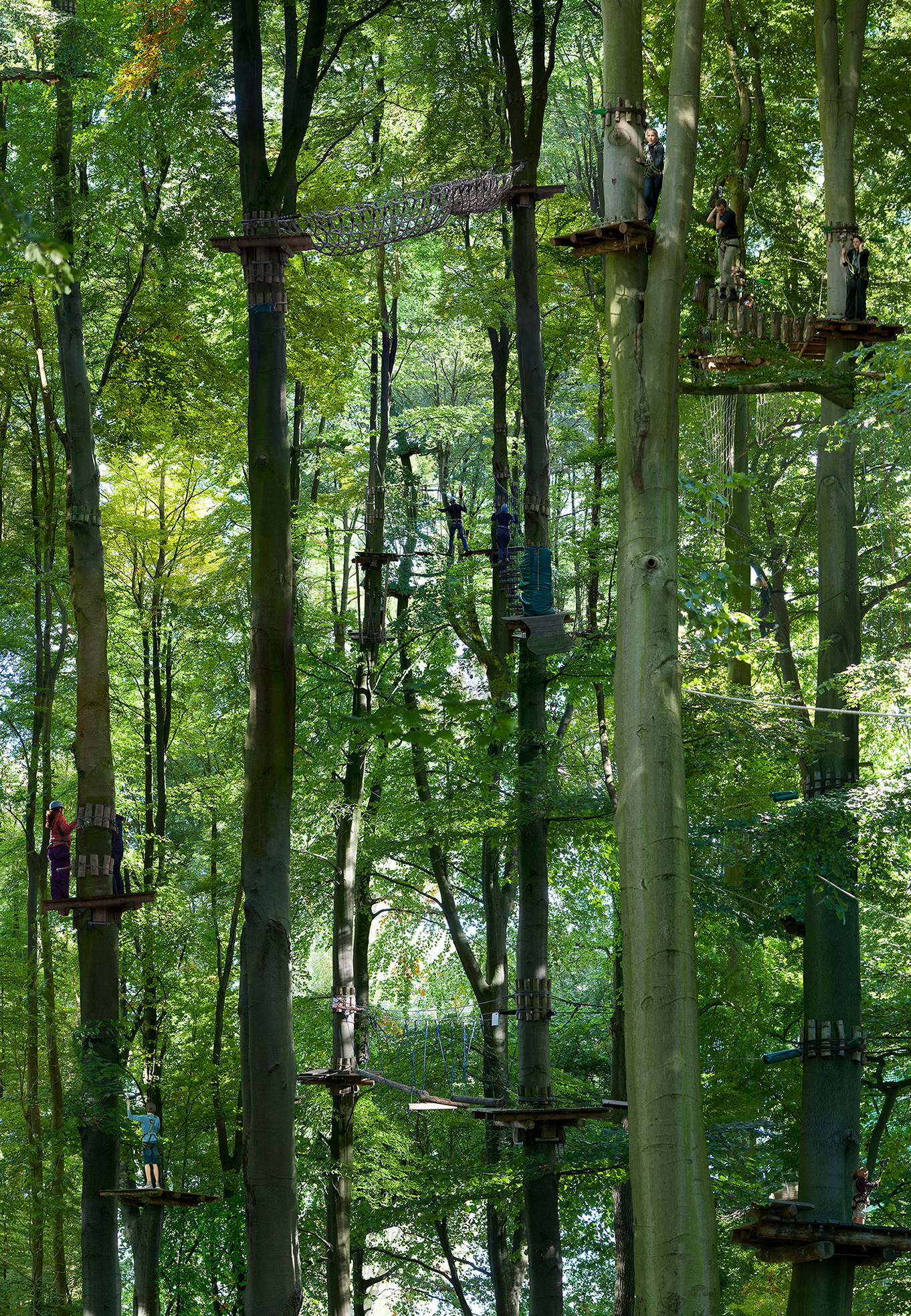
Waldung, Amsterdamse Bos
Piezography
size: 173 x 120 cm 68" x 47"
year: 2013
Korfmann's series Symbiocene was inspired by Glenn Albrecht, an environmental philosopher and writer. He coined the term Symbioceen to describe a new era in which humans, nature, and technology coexist in harmony and support one another. His theory presents a hopeful outlook for what lies ahead. For this series, Korfmann photographed various parks in Amsterdam.
The German title Waldung derives from the 19th-century romantic view of nature as all-encompassing, wild, and beautiful at the same time, in which humans recognise the divine and are rendered insignificant, at the mercy of nature. The photograph Waldung shows an adventure park in the artificially created Amsterdamse Bos, where several trees are connected by climbing cables and ropes. A number of people are scattered throughout the image; they stand on platforms or hang in the ropes and seem to blend into the natural surroundings. The photograph's perspective is unusual for Korfmann: neither the beginning nor the end of the trees is visible, the ground is absent, and the trees appear endless, emphasising the all-encompassing power of nature.
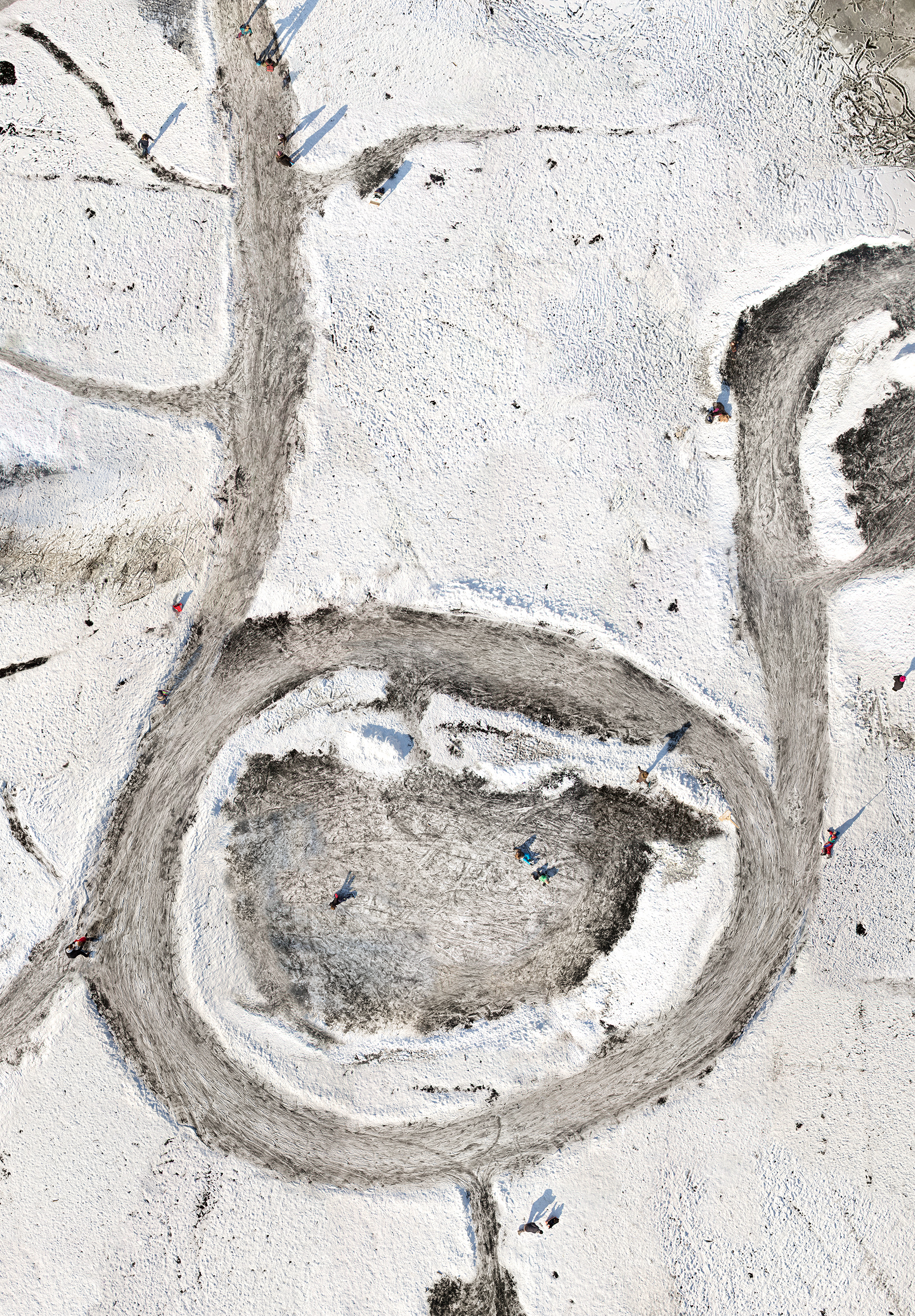
Cobra, Rembrantpark Amsterdam
Piezography
size: 173 x 120 cm, 68" x 47"
year: 2012
Korfmann's series Symbiocene was inspired by Glenn Albrecht, an environmental philosopher and writer. He coined the term Symbioceen to describe a new era in which humans, nature, and technology coexist in harmony and support one another. His theory presents a hopeful outlook for what lies ahead. For this series, Korfmann photographed various parks in Amsterdam.
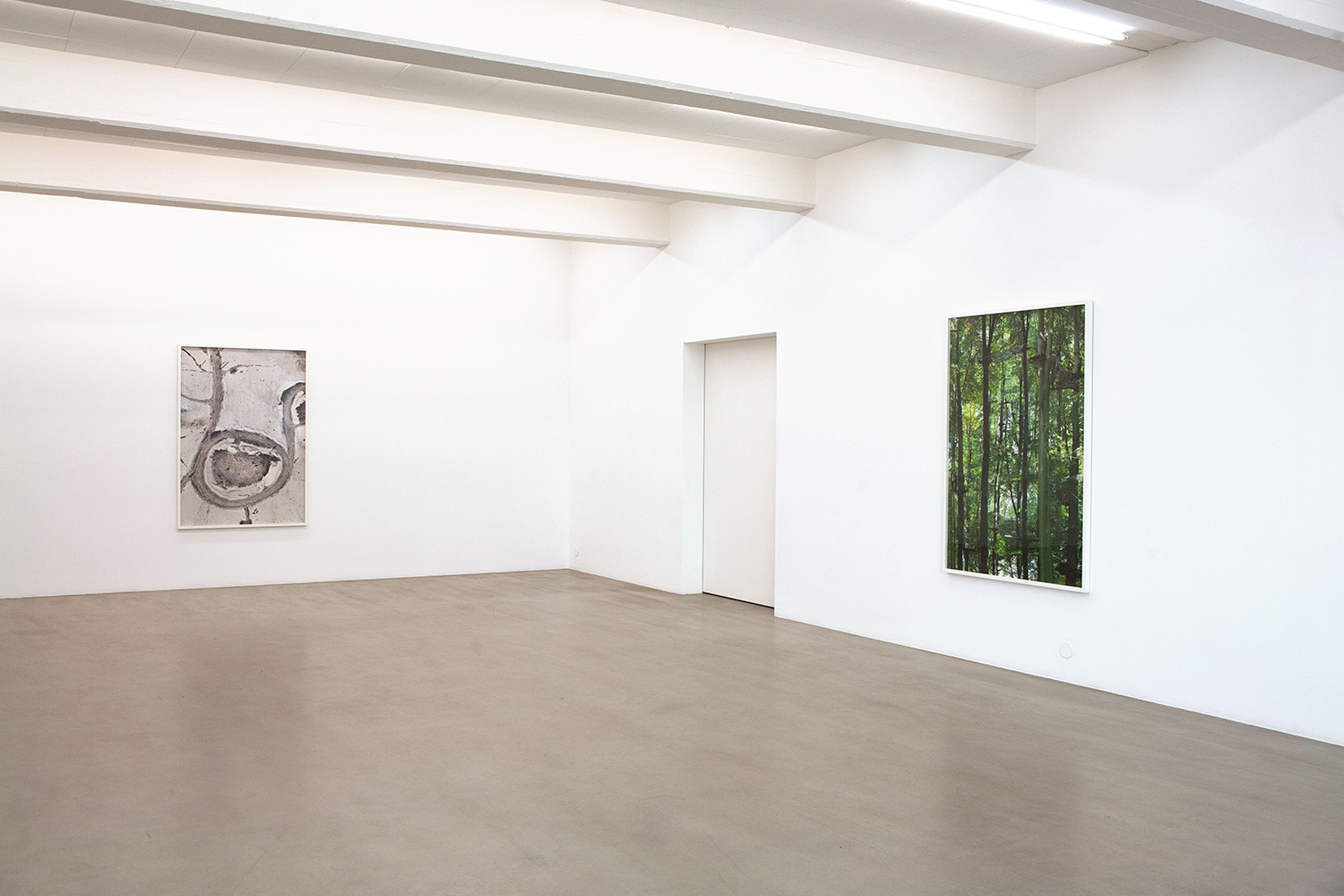
Cobra / Waldung
Installation view Gallery Andersson/Sandström, Stockholm
Nelson Mandela Park Paradise
Studio view